So you just bought your nifty new e-bike and you’re making plans to ride it on your local trails. You researched your trail’s rules and you know bicycles are permitted, but are e-bikes allowed? And the answer is always “maybe, or maybe not” – it depends.
Initially, at the trail head you may be greeted with a sign that says something like this: “NO MOTOR VEHICLES”.
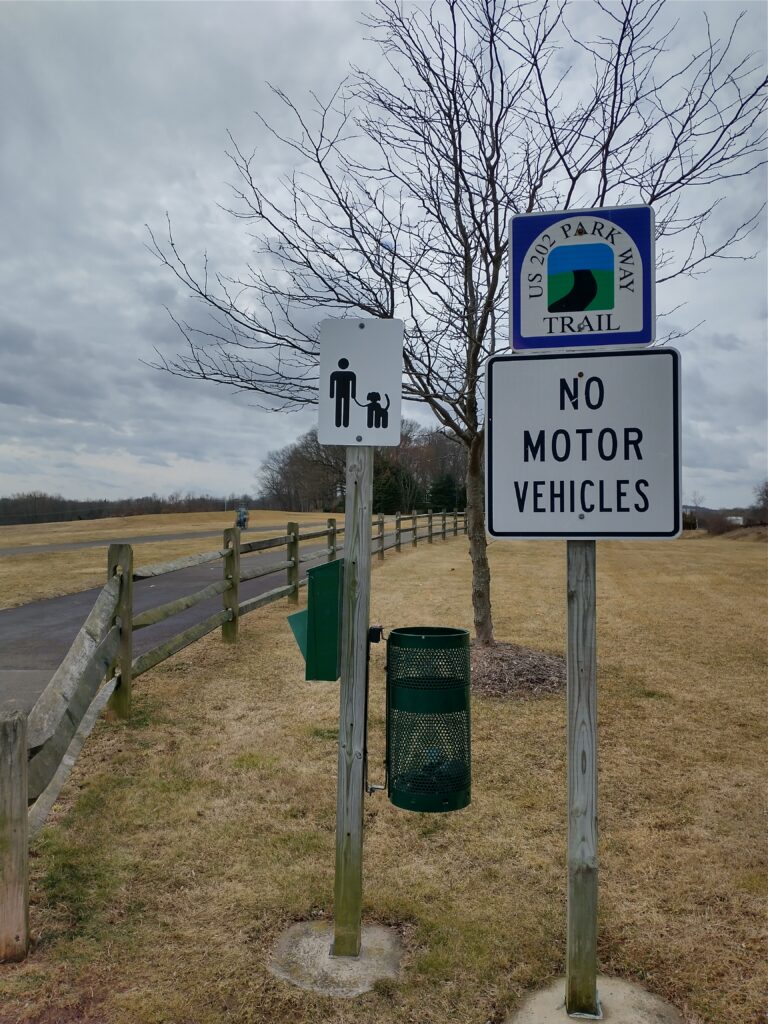
But don’t be overly concerned since this sign is intended to keep things like cars, motorcycles, ATVs, etc. off the trail. But this doesn’t mean you won’t be confronted by your friendly neighborhood ‘Karen‘ who insists it applies to e-bikes as well. But you can calmly and respectfully explain that Federal and State laws consider your e-bike to be a regular bicycle (assuming you’re riding a Class 1 or 2 e-bike – more on this in a moment), and if a bicycle can use this trail, you can too. Just see how that explanation flies – usually not well…
But here’s the rub. Many ill-informed municipalities instead feel the need to post signs that specifically prohibit e-bikes on their paths.
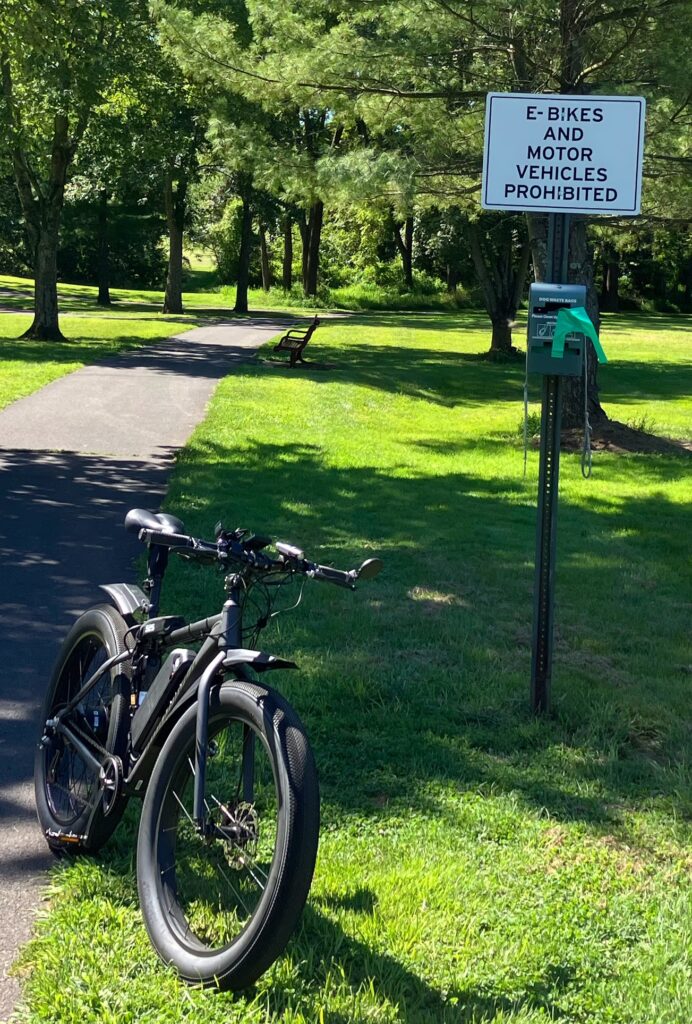
And these are usually unenforceable because they try to stretch their existing ordinances to include e-bikes within ‘vehicle’ or ‘recreation vehicle’ prohibitions. Class 1 and 2 e-bikes are NOT recreation ‘vehicles’. Then there are many trails that are explicitly Class 1 e-bike trails. Class 1 means pedal assist only, no throttle. But most e-bikes on the market have throttles pre-installed. In this case, you must either disable or remove your throttle before using these trails. Also, Class 1 and 2 e-bikes are capped at 20mph. so if you have taken steps to remove this limit, you’re no longer ‘legal’ on these trails.
So, let’s get personal. I have 6 e-bikes as I write this post. 5 are completely custom and 1 is a Class 2 factory bike. And considering what I just wrote about e-bikes being ‘legal’ on local trails, only 1 of mine is actually LEGAL (currently)! Is that a problem? Yes, it could be. But most likely if I’m obeying speed limits and stop signs, and behaving myself on the trails (as in, nobody is going to need to criticize my ‘trail etiquette‘), then all of my bikes should be acceptable (though still not technically legal). So let’s take inventory and see why most of my bikes aren’t legal:
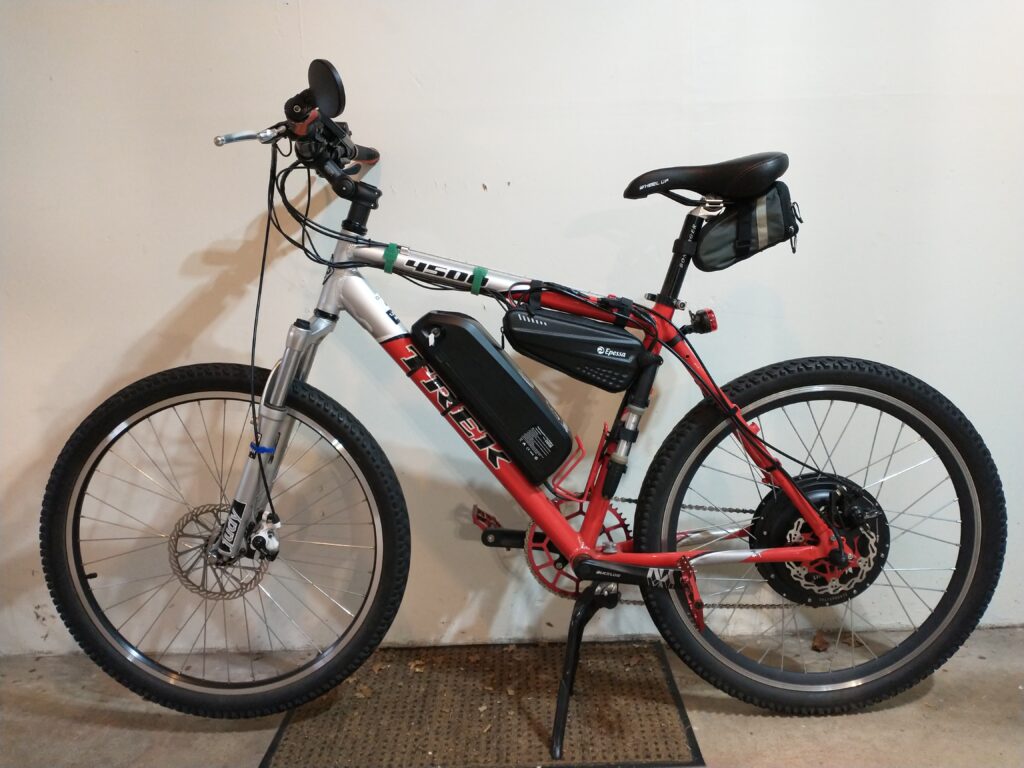
- Red Rocket – No PAS, throttle only, 1000 watt rear hub motor (legal e-bike motors are capped at 750 watts), speed unlocked to 28+ mph (not Class 1, 2, or 3 – too much power, no PAS)
No remedy – too powerful, too fast, no PAS
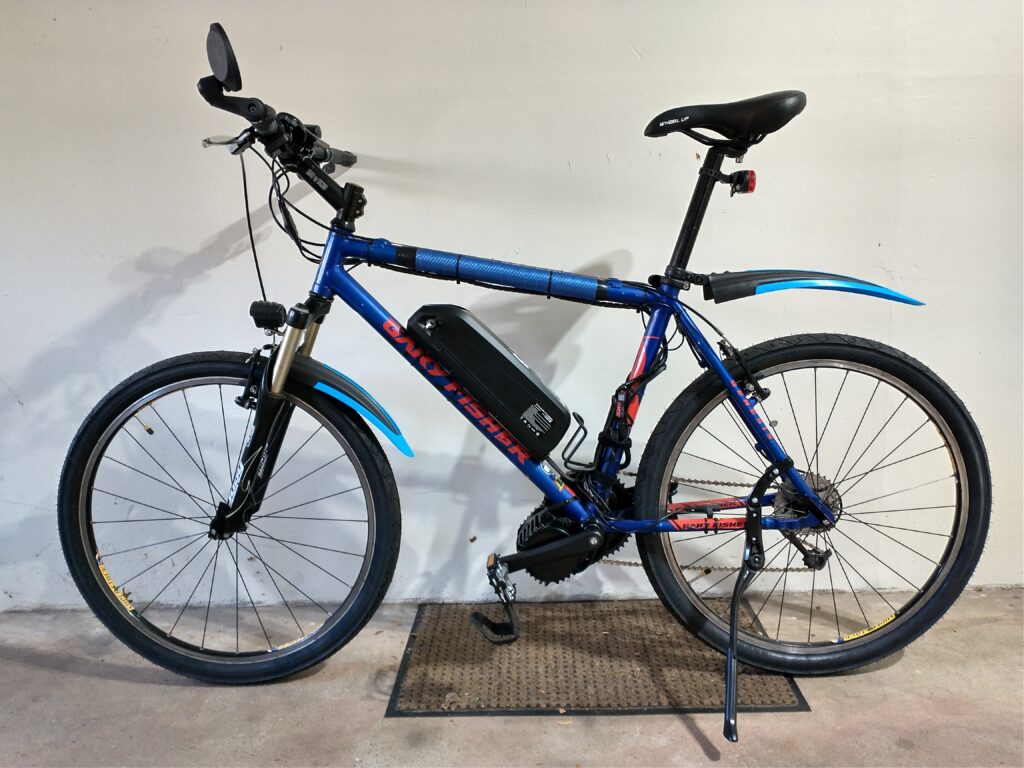
2. Blue Wave – PAS and throttle, 1000 watt mid-drive, speed unlocked (too much power)
Remedy – reprogram motor to 750 watts, restore max speed to 20mph – Class 2, or Class 1 with removable throttle just added
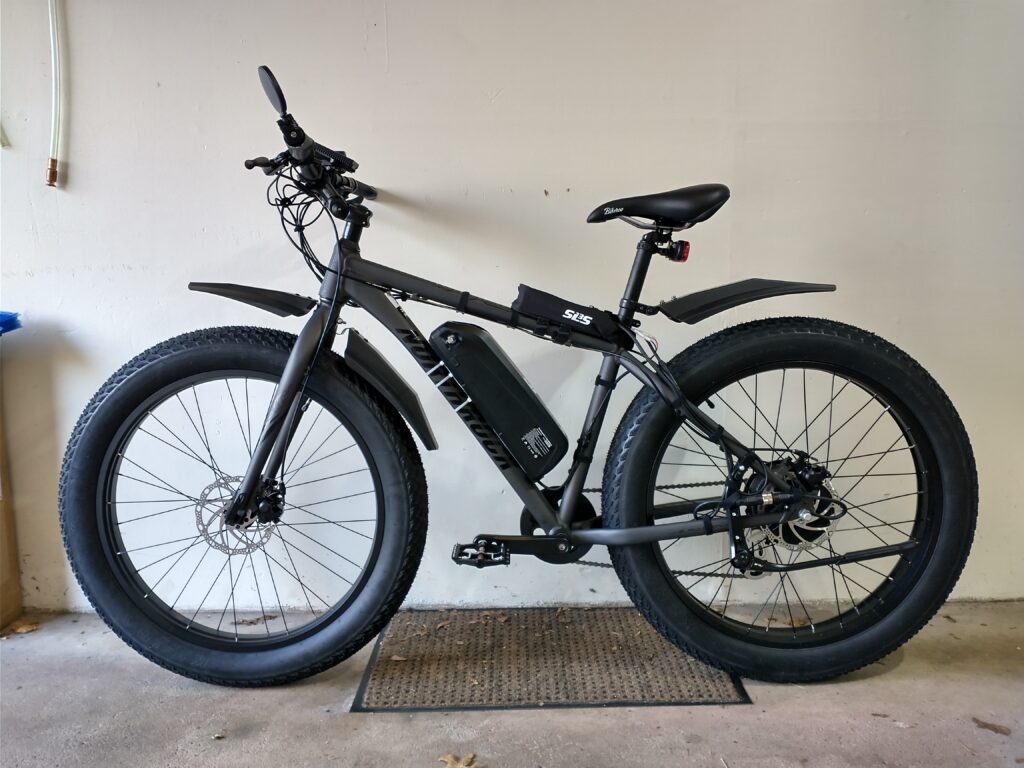
3. Fatty III – PAS plus throttle, 1000 watt rear hub motor, speed unlocked (ditto)
Remedy – reprogram motor to 750 watts, restore max speed to 20mph – Class 2, or Class 1 with removable throttle just added
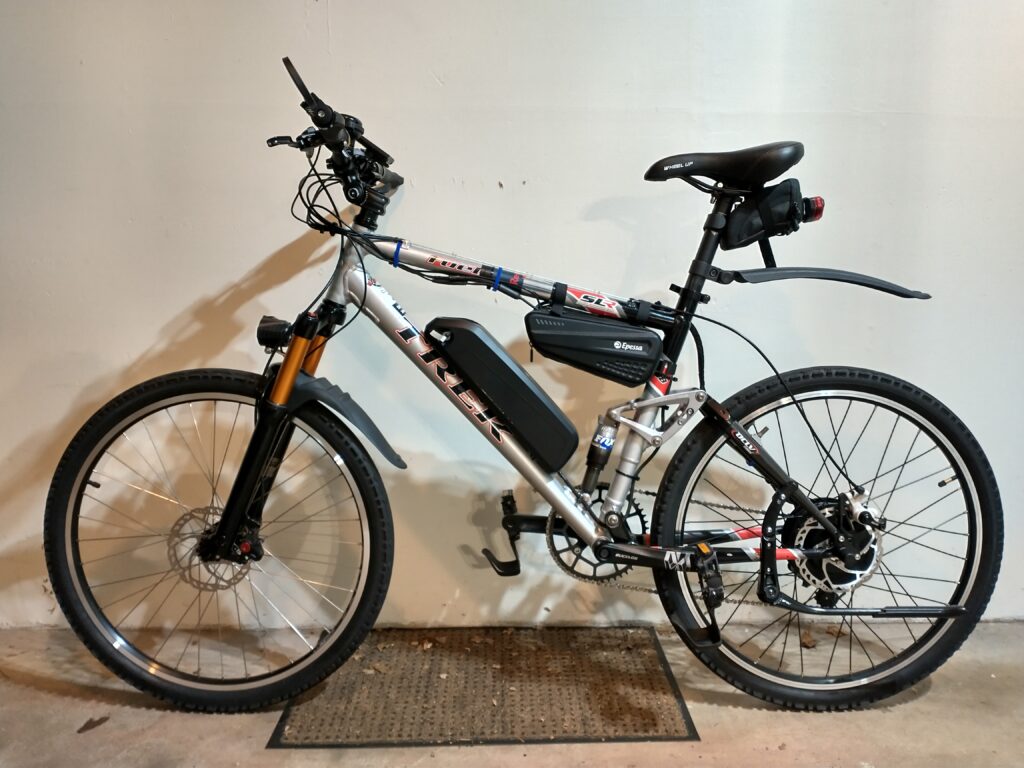
4. Silver Fox – No PAS, throttle only, 500 watt rear hub motor – full suspension (should be able to pass as Class 2, but no PAS)
Remedy – add PAS – Class 2, or Class 1 with removable throttle just added
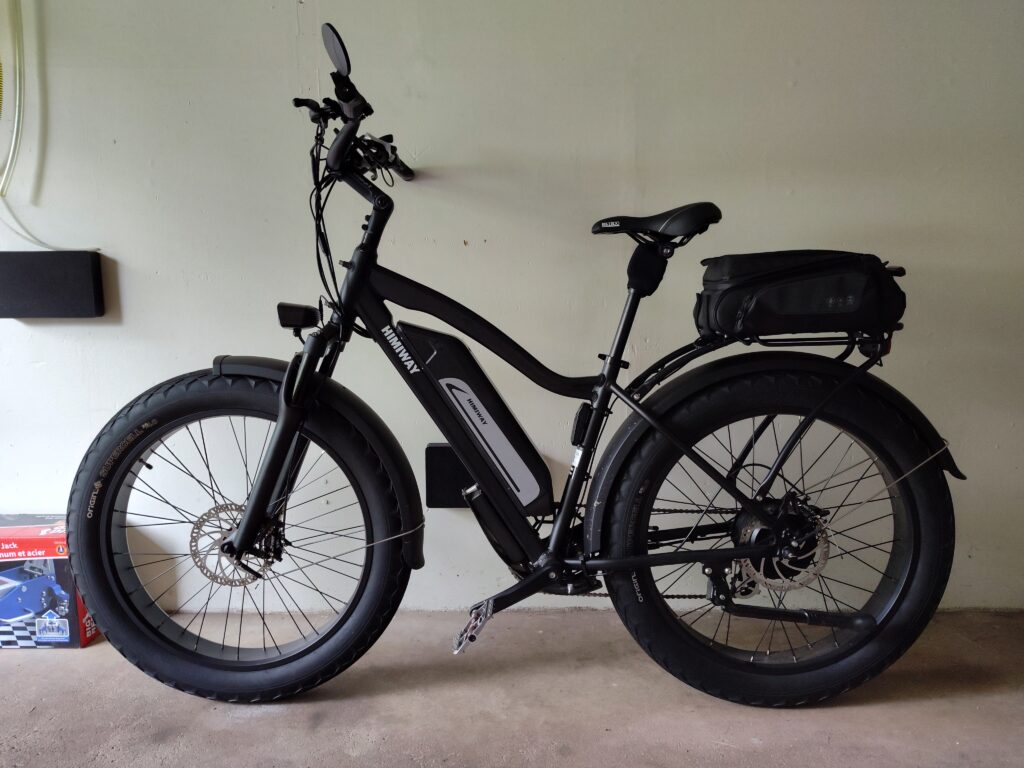
5. Himiway Cruiser (factory) – PAS, throttle, 750 watt rear hub motor (Class 2 locked at 20mph – totally legal, or Class 1 with removable throttle that comes standard with this bike)
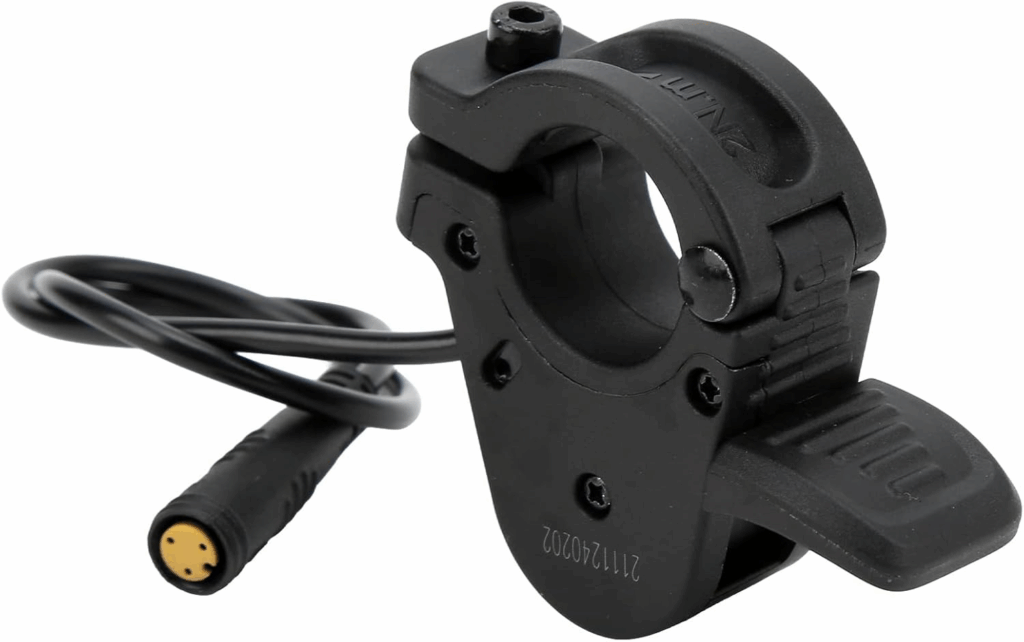
This is the ‘removeable throttle’ added to #2, 3, and 4 which means each of these bikes can be made into legal Class 1 e-bikes in a matter of minutes as long as the other issues are addressed.
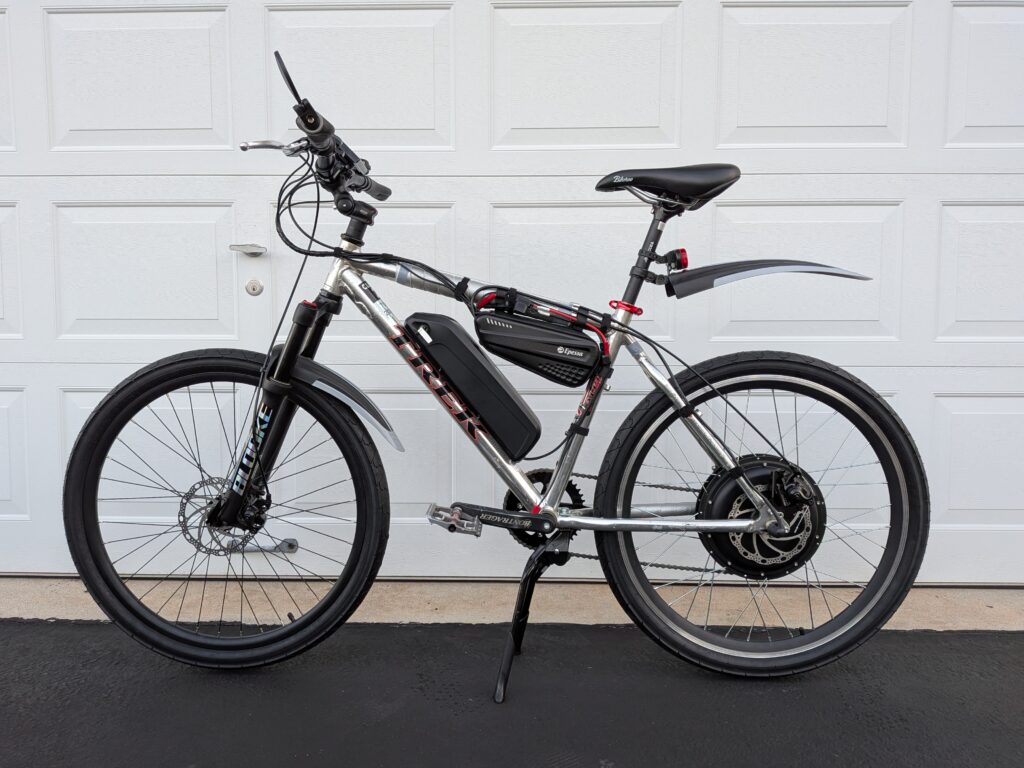
And a recent addition to my fleet:
6. Frankie – No PAS, throttle only, 1000 watt rear hub motor, speed unlocked to 28+ mph (not Class 1, 2, or 3)
No remedy – too powerful, too fast, no PAS
Here are the real issues for those who actually ride e-bikes (which often doesn’t include those making policy decisions):
- The e-bike demographic is tilted toward older people who probably wouldn’t be riding a bicycle at all if it didn’t provide assistance for hills.
- Many bicycle and e-bike riders don’t ride only on trails, but often need to ride on streets to get to their local trails. Being able to go faster than the normal trail limit of 15, or even 20mph in some cases, is often useful when riding on local streets.
- Pedal-assist simply isn’t enough for all situations, like starting out from a stop to cross a busy street, starting on a hill, etc. This is where throttles are not only useful but are an essential safety feature in my experience.
- E-bikes normally have wider tires with less tire pressure (2.4″ to 4″ is normal, and 20 to 60 lbs pressure). This makes riding an e-bike more comfortable and safer than riding with higher pressure, narrower tires.
- E-bikes are heavier and sturdier than regular bicycles so adding safety devices like mirrors, bells, lights, etc. is appropriate since overall weight isn’t usually as big a deal than it is with regular bicycles.
In closing, I’m going to put in a plug for the e-bike configuration I find most enjoyable to ride regularly and that includes my ‘throttle-only’ e-bikes. I like riding my e-bikes like regular bicycles, then supplement power as needed using the throttle. This way of riding isn’t every rider’s cup of tea, but it works for me. When you add PAS, then you’re always getting assistance which makes me work less and drains the battery more quickly – both negatives in my mind. And yeah, that means these throttle-only e-bikes are probably not entirely legal in most places. Bummer!